sometimes I just can't stop eating...

Food is comforting, that's a fact. We wouldn't use it if it didn't work. But maybe it's time to explore your relationship with food a little more, and give up the battle. I work with women who don't want to struggle with food anymore. Women who feel hatred towards their body and want to start to love themselves. Women who aren't going to try to conform to an unrealistic and unhealthy societal norm any more.
BED (Binge Eating Disorder) is a very real problem that affects over 4 million Americans. You may feel out of control around food, obsessed and ravenous. A binge can go on for hours….leaving you depressed and drained. The cycle of binge eating can be stopped-but not by dieting.
A new treatment for overeating has emerged…Intuitive Eating. In its most simple terms, intuitive eating is trusting your body’s natural hunger for food: learning to tune in and listen-eat what you want, eat when you’re hungry, stop when you’re full. It seems simple, but this process can be daunting. Intuitive Eating is an approach we can use for all disordered eating types, whether you tend to overeat or restrict. Click here to read the ten principles of Intuitive Eating!
Counseling can help you recognize the reasons WHY you eat, and help you address them in a real way. Together, we can focus on whole health rather than weight loss….a goal that will mean more for you and your loved ones, as you embrace life differently.
I usually take a team approach to treating disordered eating, which might include seeing a registered dietician, talking with your primary care physician, and adding some other holistic therapies, like Acupuncture or Yoga. Together with your team, we can work towards 'health at every size". Learn more about 'Health At Every Size". I truly believe that all bodies are amazing & strive to help women towards acceptance and self-love.
Some signs of Binge Eating Disorder include:
- Inability to stop eating or control what you’re eating
- Rapidly eating large amounts of food
- Eating even when you’re full
- Hiding or stockpiling food to eat later in secret
- Eating normally around others, but gorging when you’re alone
- Eating continuously throughout the day, with no planned mealtimes
- Feeling stress or tension that is only relieved by eating
- Embarrassment over how much you’re eating
- Feeling numb while bingeing—like you’re not really there or you’re on auto-pilot.
- Never feeling satisfied, no matter how much you eat
- Feeling guilty, disgusted, or depressed after overeating
- Desperation to control weight and eating habits
Size Acceptance:
Along with utilizing mindful & intuitive eating, I practice size acceptance. Remember when we were kids and there were all kinds of muppets? Like, green muppets, pink muppets, hairy muppets, chef muppets, rat muppets, tiny muppets, and giant muppets. All the muppets were great!
Somehow as a grown up, we've come to the conclusion that some muppets are better than other muppets. I mean, I LOVE the muppets, how can you choose Kermit over Grover? WHY would you want to?
This is also how I feel about human bodies. Even when we are successful at recovery from Binge Eating Disorder, it may mean living in a larger body than muppet-judgers think is ok. But you know what? SCREW those muppet judgers. Your body is a gift, and the world is the part that's messed up.
I am certified as an Intuitive Eating Pro! I also strongly believe in HAES, or "Health At Every Size".
FAQ on Intuitive Eating and haes:
Feeling out of control with food or your body can be overwhelming. Many women describe emotional eating, cycles of restriction and overeating, or constant guilt about food and weight. These struggles aren’t about “willpower”—they’re about deeper patterns connected to stress, emotions, and self-worth. If you’ve ever Googled “why can’t I control my eating?” or “how do I stop obsessing about food?” you are not alone. Below are answers to common questions women ask when they’re struggling in their relationship with food and body image.
1. Why do I feel out of control with food?
Feeling out of control with food often happens when eating is tied to emotions, stress, or unmet needs rather than just physical hunger. Restriction and dieting can also trigger rebound overeating. Therapy helps uncover the root causes, so food doesn’t feel like a battle.
2. Is emotional eating the same as binge eating?
Not always. Emotional eating is when food is used to cope with feelings like sadness, stress, or boredom. Binge eating involves eating large amounts of food in a short period, often with a sense of loss of control. Both can feel distressing, and both can be worked on in therapy.
3. Why do I eat when I’m not hungry?
Eating when not physically hungry is usually about emotional hunger—wanting comfort, distraction, or relief. Sometimes it’s also a response to restriction, where your body and brain feel deprived and drive you to eat more. Identifying triggers and building new coping tools helps break this cycle.
4. How can therapy help with food and body image struggles?
Therapy provides a safe space to explore the emotions, beliefs, and experiences that shape your relationship with food. Together, we can work on reducing guilt and shame, increasing body acceptance, and developing strategies so food feels less overwhelming and more balanced.
5. Is this the same as an eating disorder?
Not always. Many women struggle with food without meeting full criteria for an eating disorder. But even if it doesn’t have a “diagnosis,” the distress is real and worthy of support. If symptoms suggest an eating disorder, therapy can be tailored to address that too.
6. Can I ever feel “normal” around food again?
Yes. Many women who once felt controlled by food learn to eat with freedom and peace. Recovery doesn’t mean never thinking about food—it means food no longer has power over you, and you can trust yourself to eat without guilt or shame.
7. Do I need to give up dieting to feel better?
For most women, yes. Dieting and restriction often make food struggles worse by creating a cycle of deprivation and overeating. Therapy often takes a non-diet approach—focusing on listening to your body, improving self-compassion, and creating sustainable habits instead of rigid food rules.
8. Is this about food, or something deeper?
Often both. While food may be the surface struggle, underneath are emotions like anxiety, loneliness, shame, or stress. Healing your relationship with food means also tending to these deeper emotional needs.
9. What if I want to change my body and still feel more in control with food?
It’s normal to want body changes, especially in a culture that pressures women about appearance. Therapy can help you approach these desires with self-compassion and realistic goals—so you can care for your body without falling into cycles of restriction, shame, or self-criticism.
10. How long does it take to change my relationship with food?
It varies. Some women feel relief within weeks of therapy as they begin to understand triggers and let go of guilt. For others, healing takes longer, especially if food struggles have been present for years. Progress builds step by step, and lasting change is possible.
11. Can I work on this even if I don’t have an “official” eating disorder?
Absolutely. You don’t need a diagnosis to deserve support. If food, eating, or body image are taking up too much of your mental energy or causing distress, therapy can help you feel more balanced and in control.
12. Will I ever feel at peace with my body?
Yes. While body image healing is a journey, many women move from constant body criticism to acceptance and even appreciation. Therapy helps shift the focus from appearance to overall well-being, so you can feel more at home in your body.
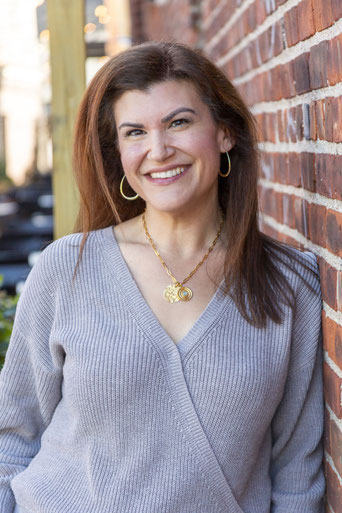
Jessica Foley, MA, LMHC, LLC
Psychotherapy For Women Seeking Growth & Positive Change™!
9 Brewer Street, Unit 2
New London, CT 06320-6071
Tel: 617 877 0071
Fax: 617 440 3653
CURRENT LICENSES:
Licensed in MA LMHC #6161
Licensed in CT LPC #004707
Licensed in CA LPCC #2005
Licensed in AZ LPC #17766
Licensed in FL LMHC #18336
Licensed in NJ LPC #37PC01150400
Licensed in NY MHC #017116
HOURS (EASTERN STANDARD TIME):
MONDAY: 10:00AM-6:00PM
TUESDAY: 10:00AM-6:00PM
WEDNESDAY: 10:00AM-6:00PM
THURSDAY: 10:00AM-6:00PM
FRIDAY: 10:00AM-4:00PM
Let's Get Social, Ladies!
I'm also all over social media and you can follow me below! Disclaimer: Social media is a public place. Even private messages on social media are NOT secure. Please do not share anything you would not want the public to read. If you are interested in becoming a client, please know that I do use a HIPAA secure platform for email & video sessions to keep your info safe and protected. Super Important Note: Following or engaging with me on social media is NOT the same as having a therapeutic relationship. I cannot answer any clinical questions. There is no expectation that clients follow me, and I will never follow you back to protect your privacy. Please refrain from including personal info in your comments on any of my social media posts. My social media presence is for entertainment and information only and does not serve as therapy.
Proud TO BE A PART OF:




If you have found this site while in crisis, and are considering self-harm, please contact this excellent resource, or call 911 immediately!